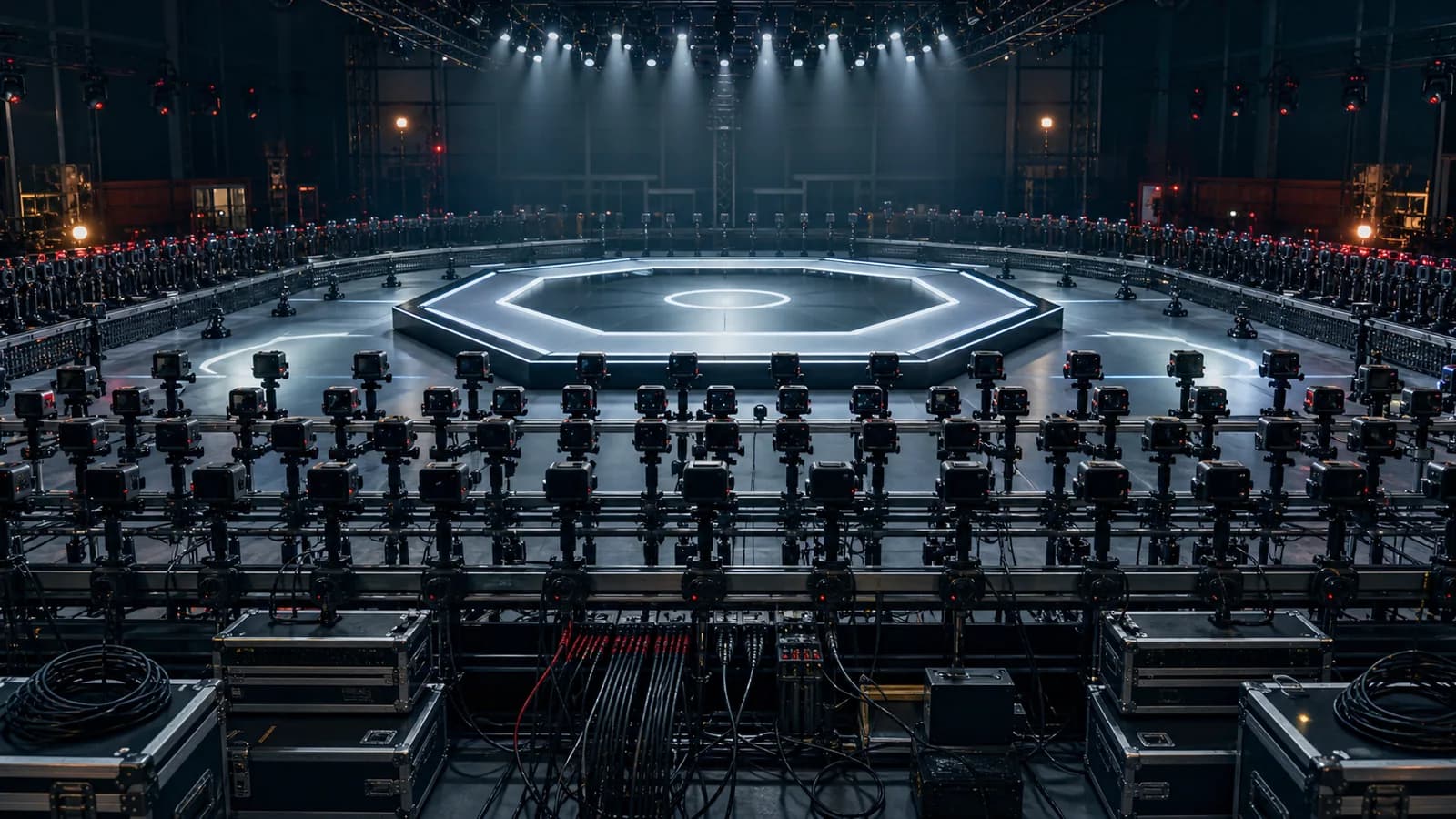
The headline number is real: Beast Games used 1,000 GoPro HERO12 Black cameras with Media Mods.
That is the clearest camera fact the production has made public. It is also only one layer of a much larger camera operation. GoPro's report explains the action-camera system in unusual detail, but it does not publish a complete inventory of every cinema, broadcast, long-lens, robotic, or specialty camera used across the series.
So the accurate answer is specific: we know the GoPro fleet. We should not fill the gaps with guesses based on blurry behind-the-scenes frames.
Evidence key: Confirmed by the person means the named person directly identified the product. Confirmed by an official representative means a production leader, company, or manufacturer documented it. Visually identified means a product appears in dated footage but has not been directly confirmed.
The confirmed camera: GoPro HERO12 Black
Confirmed by an official representative: GoPro interviewed Beast Games series director of photography Jason Elliott and reported that the production used 1,000 HERO12 Black cameras, each paired with a Media Mod.
Elliott's explanation is more interesting than the model number. The cameras were small enough to sit in places where an operated camera and large lens would be intrusive or physically impossible. They were also economical enough to deploy at a scale that would be absurd with cinema bodies.
That scale mattered because the production started with 1,000 contestants. Editors could not know on day one which person, friendship, argument, or reaction would become essential to an episode. Coverage was a form of insurance.
Why the Media Mod mattered
The Media Mod turns the HERO12 Black into a more production-friendly unit. It adds a directional microphone, a 3.5mm microphone input, HDMI-out, and accessory mounting points.
GoPro's account says the fleet was used to capture video, audio, and personal contestant moments. A compact camera is less intimidating than an operator pointing a large lens at someone. That can produce a different kind of interview, especially with contestants who are not professional performers.
The article does not say that every camera used every Media Mod feature or that its built-in microphone supplied all final dialogue. It confirms the physical pairing and the production goal.
Timecode was the quiet hero
Recording 1,000 angles is easy compared with finding the right seconds later.
Elliott singled out the HERO12 Black's Timecode Sync feature as a lifesaver. Timecode gives recordings a shared temporal reference, allowing post-production teams to align footage from different cameras to the same event. Without it, a thousand files can become a thousand separate clocks.
The GoPros still required people. Elliott thanked a dedicated team of more than 10 who handled preparation, installation, management, and strike. The cameras may have been small, but the workflow was not automatic.
Where the GoPros went
The documented use cases fall into three groups.
Close, personal coverage
Small cameras could be placed near contestants without a camera operator occupying the same space. Elliott said this helped the production capture conversations, strategies, and reactions with less pressure.
Angles a large camera could not reach
The HERO12 Black units could sit out in the open or fit into tight parts of the set. Their wide view and small footprint made them useful as fixed witnesses to a complicated game.
Expendable danger cameras
MrBeast productions are known for large physical stunts. Elliott said GoPros were placed near explosions and impacts because losing one was financially tolerable compared with risking a full cinema rig. He had lost count of how many had been crushed or blown up during his time at Beast.
Were GoPros the main cameras?
“Main” is the wrong frame for a production like this.
The GoPro fleet provided extraordinary coverage and some of the closest perspectives in the finished show. Larger cameras and staffed positions were still needed for controlled compositions, long lenses, host coverage, and the visual continuity expected from a Prime Video series.
No primary source we found publishes the full model-by-model package for those other layers. Calling an unconfirmed body a Sony VENICE, RED V-RAPTOR, ARRI ALEXA, or anything else would turn visual speculation into a fact. This draft deliberately stops where the documentation stops.
The real camera innovation was organizational
The HERO12 Black is a consumer action camera. What made the Beast Games use remarkable was the system around it:
- 1,000 synchronized units
- a dedicated 10-plus-person GoPro team
- eight weeks of filming
- planned placement for emotion, coverage, and danger
- a post-production path built around common timecode
That is the useful answer to the question. Beast Games did not simply buy a thousand cameras. It treated a cheap, small camera as a networked production layer and staffed it like one.